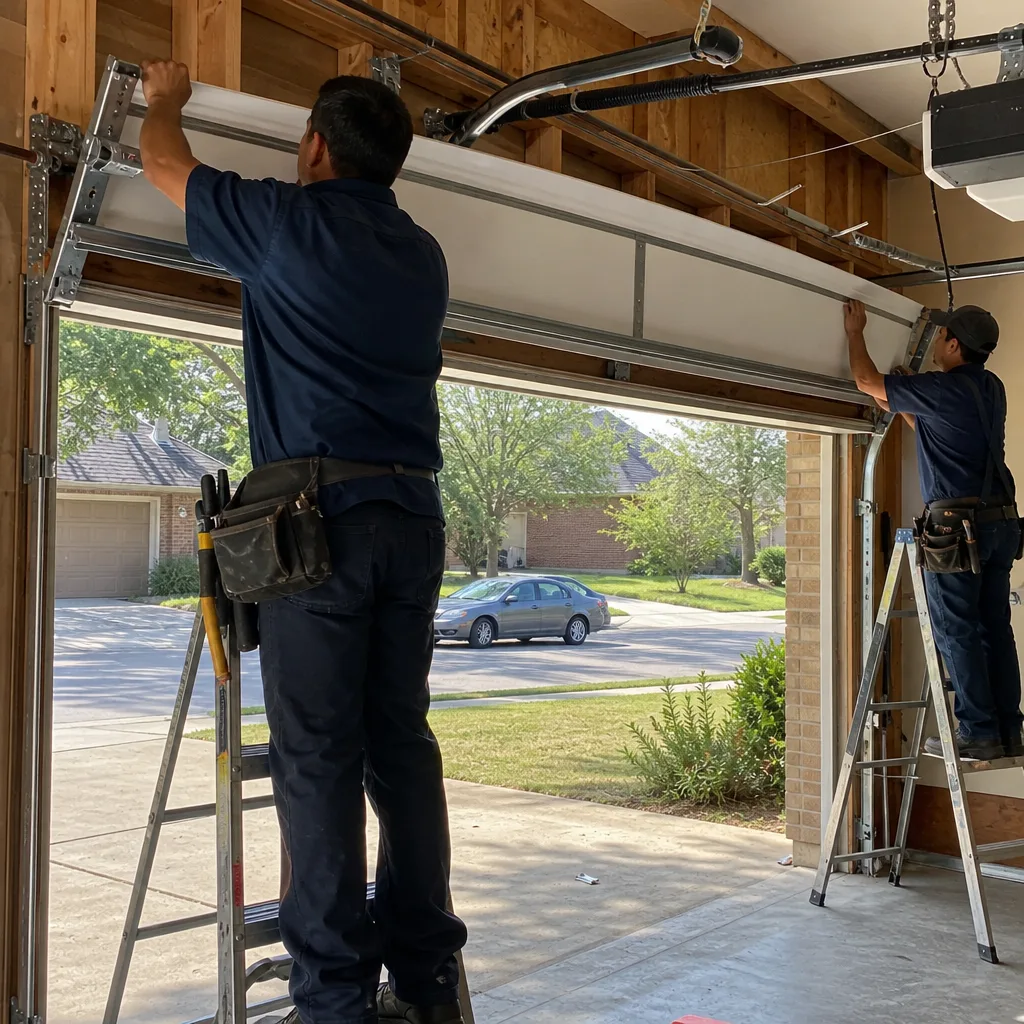
Last updated November 21, 2026
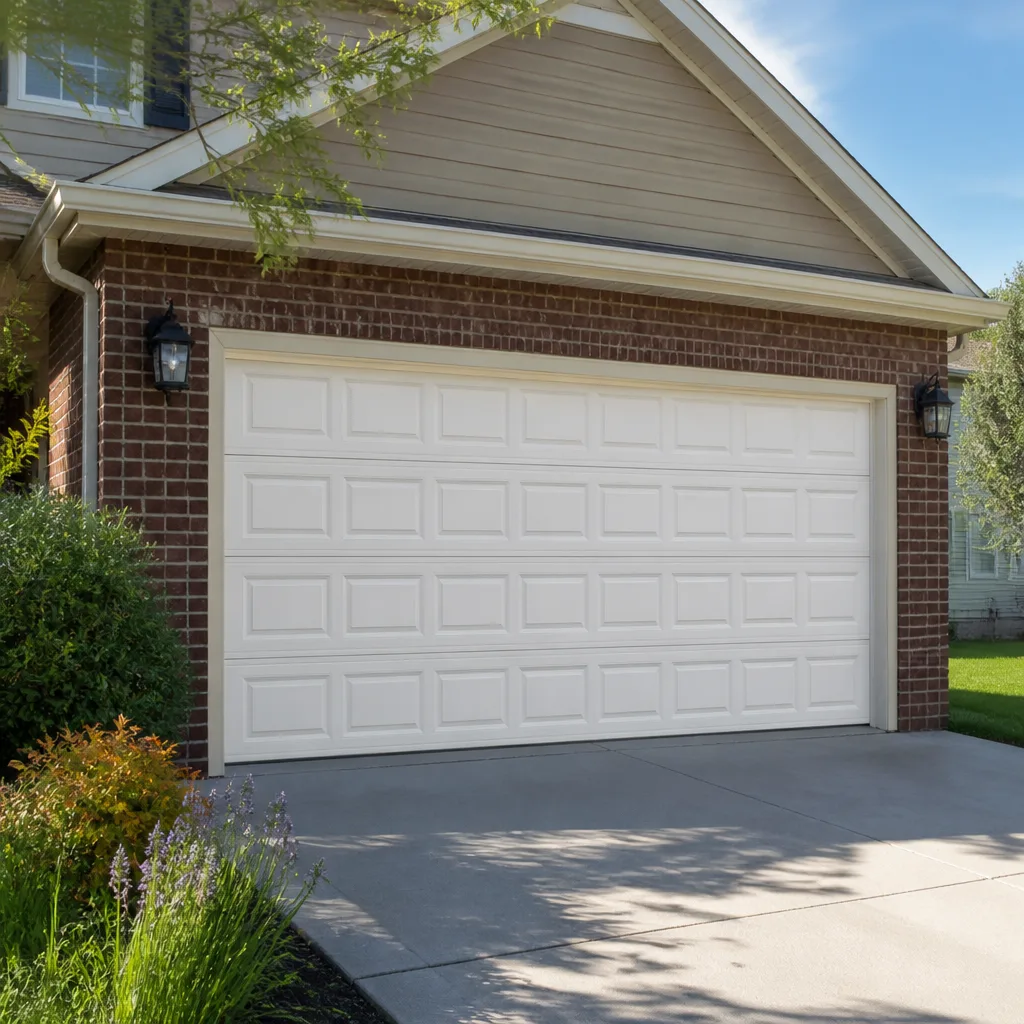 Raised-panel steel
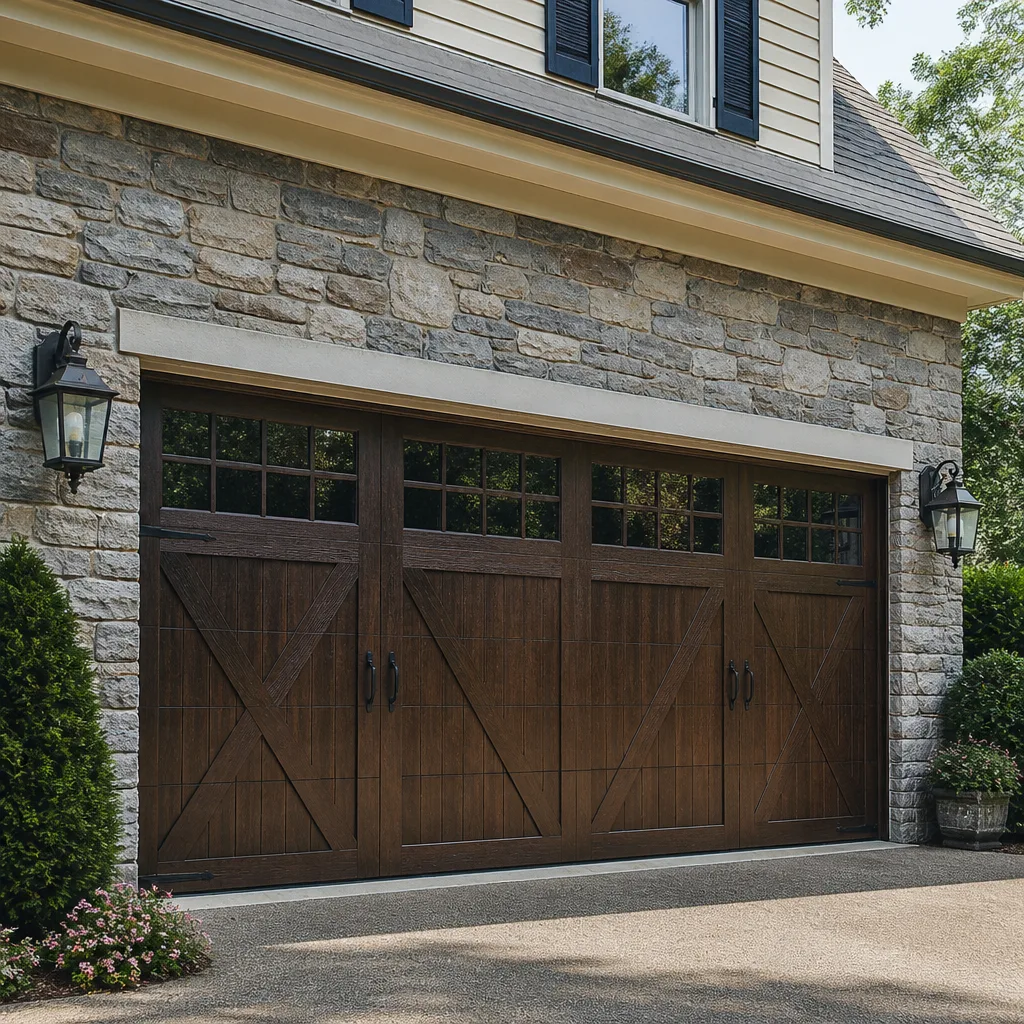 Carriage house
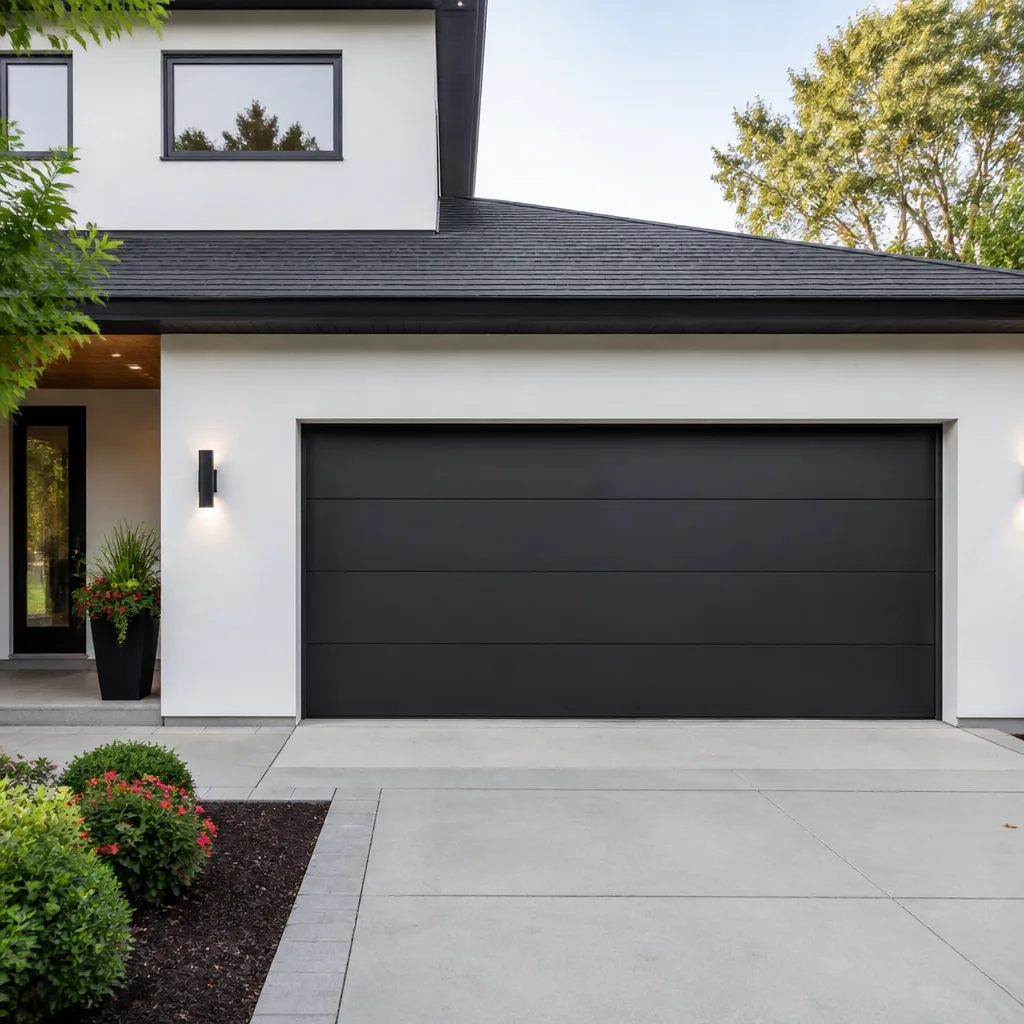 Modern flush
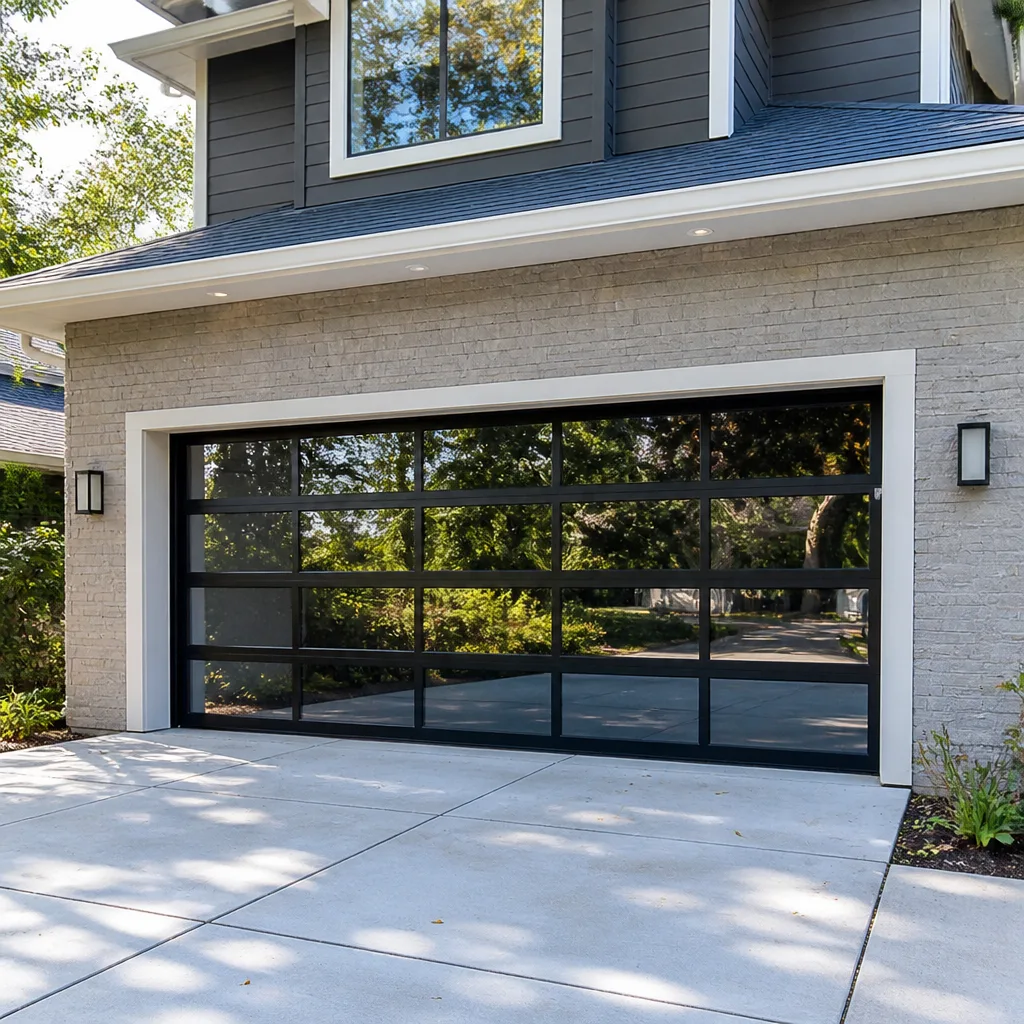 Full-view glass
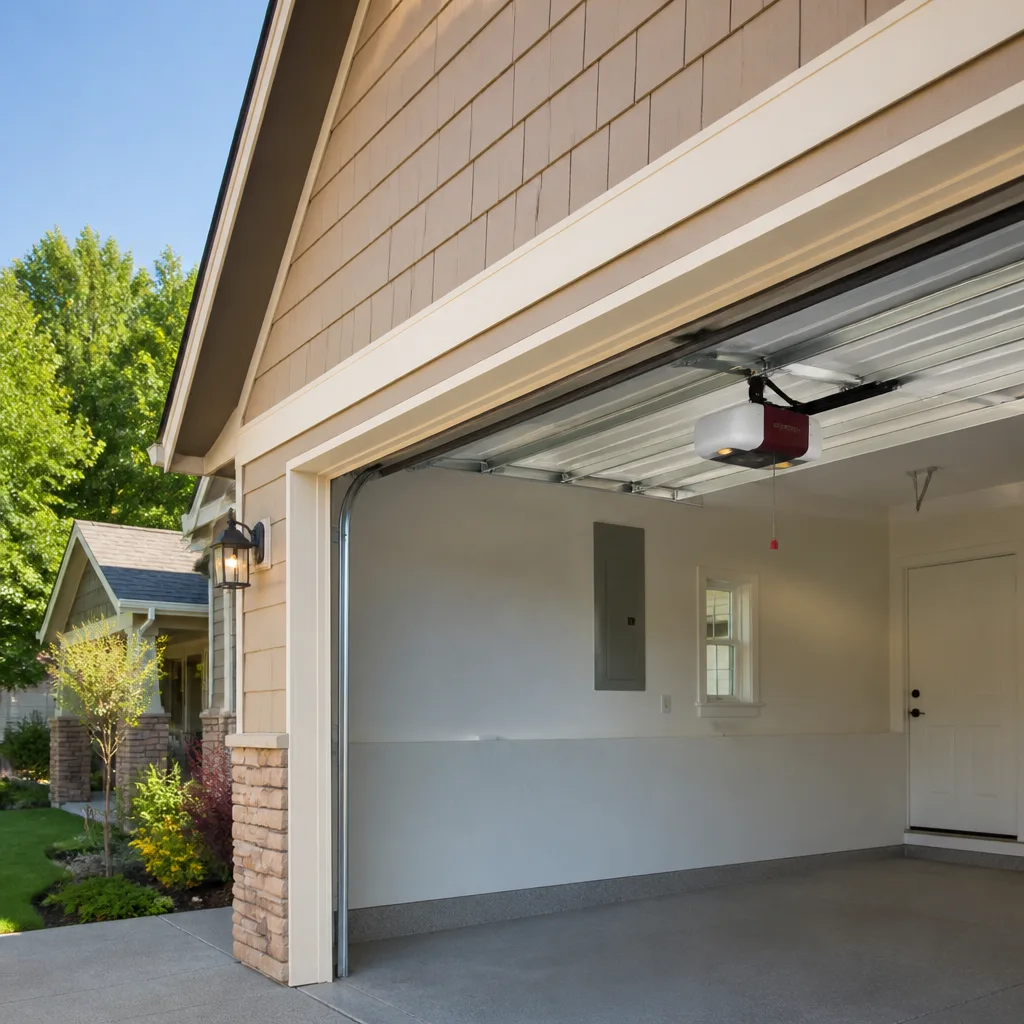 LiftMaster openers
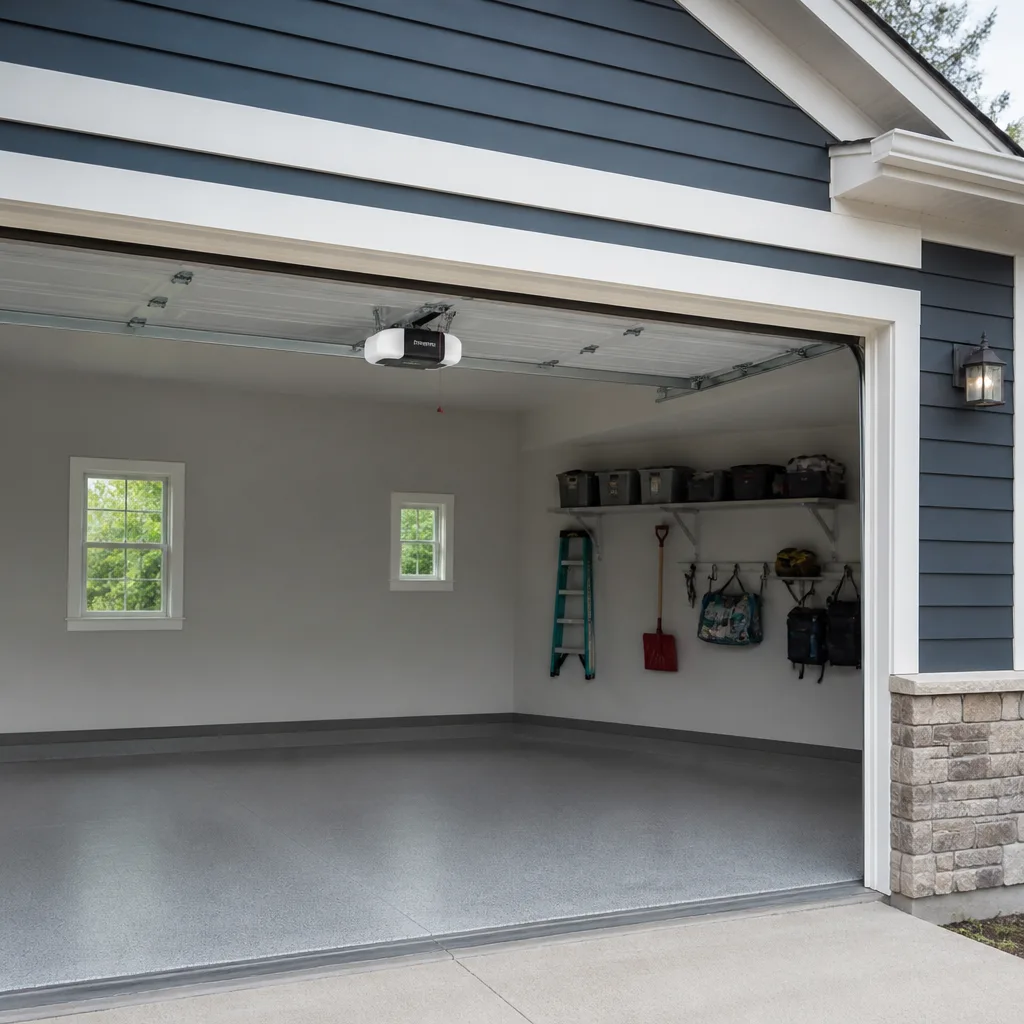 Chamberlain openers
Full 25-point door and opener safety check with every visit - springs, cables, rollers, tracks, and your LiftMaster or Chamberlain opener included
You get a price before we start. It does not change when the pro arrives.
Get your free estimateGarage Door Warning Signs: A Pasadena Homeowner’s Reference Guide
A garage door that hesitates for two seconds before it moves is not “just being slow.” That pause is often a torsion spring that has lost enough tension to trip the opener’s load sensor, and it usually has two to four weeks before it fails completely. Most garage door breakdowns in Pasadena announce themselves long before they strand your car. The problem is that homeowners read the signals as quirks instead of warnings. This guide breaks the signs into three buckets – what you see, what you hear, and how the door behaves – so you can match what you’re noticing to a likely cause and know whether it’s a same-week repair or something to watch. We’ll also cover the signals that are specific to Pasadena homes: humidity, UV, and the wear patterns we see on doors across the city.
Quick Answer
Garage door warning signs fall into three groups: visual (rust streaks, frayed cables, cracked hinges, shrinking weather seals), auditory (popping, grinding, rattling, or a loud bang from a snapped spring), and operational (sluggish starts, uneven travel, a door that reverses before closing, or an opener that strains). Any sign involving cables, springs, or an off-track door is a stop-use situation, not a wait-and-see. Signs like a noisy roller or a worn seal are safe to schedule within a couple of weeks.
Styles & brands we work with
- Raised-panel steel
- Carriage house
- Modern flush
- Full-view glass
- LiftMaster openers
- Chamberlain openers
Table of Contents
- Visual Warning Signs You Can See From the Driveway
- Auditory Warning Signs: What Your Door Is Telling You
- Operational Signs: When the Door Misbehaves
- Opener Problem or Hardware Problem? The Distinction That Changes Your Repair
- Pasadena-Specific Warning Signs: Humidity, UV, and Corrosion
- Same-Week Repair Priority vs. Watch-and-Schedule
- The Two Warning Signs Homeowners Dismiss Most
- Why Springs and Cables Are Never a DIY Job
Visual Warning Signs You Can See From the Driveway
Start with a slow walk around the door with the garage light on. Most of what fails on a garage door is visible before it breaks, provided you know what you’re looking at. These are the visual signs we check first on any inspection, and you can check them yourself in under five minutes.
- Rust streaks on the tracks or rollers. Small orange-brown trails along the vertical or horizontal track usually mean the rollers or bearings have started to corrode. In Pasadena, where summer humidity sits high for weeks at a time, this corrosion timeline runs faster than in drier parts of Texas.
- Frayed or kinked cables. The lift cables on either side should be taut with no visible fraying, bird-caging, or slack. A frayed cable is a same-week call – it’s holding load and can snap.
- Springs that look stretched or have a visible gap. A torsion spring with a gap in its coil has broken. An extension spring that looks longer than it should have lost tension. Either way, stop using the door.
- Cracked or split hinges and rollers. Look at each hinge knuckle and roller stem. Hairline cracks in the hinge body mean the metal is fatigued.
- A weather seal that has pulled away or cracked. The rubber or vinyl seal along the bottom and sides should sit flush against the frame. Sun exposure in Pasadena dries and shrinks these faster than most homeowners expect.
- Bent or bowed door panels. Even a slight bow puts extra load on the opener and the tracks.
- Loose or missing bolts on the hinges and brackets. Vibration works these loose over time. A missing bolt is a two-minute fix; a loosened bracket that swings into a panel is not.
If you find rust streaking plus a frayed cable, that’s a pair of problems that tend to travel together – the corrosion stresses the cable, and the cable takes the load. When you see both, call for garage door repair instead of waiting for a scheduled tune-up.
Auditory Warning Signs: What Your Door Is Telling You
Sound is often the earliest signal, and the easiest to ignore because it comes on gradually. A door that has always been quiet and starts to talk is telling you something. Here’s how to translate what you’re hearing.
- A single loud bang, followed by a door that won’t lift. This is the classic sound of a torsion spring breaking. It’s not a subtle noise – it sounds like a gunshot inside the garage. Do not try the opener again.
- A rhythmic popping or clicking as the door moves. Usually a bad roller or a hinge that has worked loose. Fairly cheap to fix, worth scheduling within a couple of weeks.
- A grinding or scraping sound. The door is likely rubbing against a track that has shifted, or a roller has seized and is dragging. Grinding means metal-on-metal – it gets worse, not better, and it can damage the panel.
- A metallic rattle that gets worse over days. Loose hardware somewhere in the linkage. Track it down before it becomes a broken bracket.
- A high-pitched squeal when the door starts moving. Dry or worn bearings. The rollers and torsion tube need lubrication, or the bearings are on their way out.
- A dull thud or strain from the opener head. The opener is pulling harder than it should. That’s an operational signal as much as an auditory one, and we cover it in the next section.
In our experience, the loud bang is the only one that calls for an immediate stop. Everything else on this list can usually be scheduled – but “scheduled” means this week, not next month. A grinding track or a seized roller will damage panels if you keep running the door through it.
Operational Signs: When the Door Misbehaves
Operational signs are about how the door moves – how it starts, how it travels, and whether it completes the cycle. These are the ones homeowners notice most because they interrupt the routine. The mistake is treating a door that “mostly works” as fine.
- A hesitation before the door moves. The opener engages but the door sits there for a beat or two before lifting. This is the spring-tension signal described at the top of this guide. The opener is pulling against more weight than it was designed for, and the load sensor is hesitating. Get it checked within two weeks.
- Uneven travel. One side of the door goes up before the other, or the door binds partway through the cycle. Tracks out of alignment, a stretched cable, or a spring with uneven tension – all of these cause this. It’s a same-week sign because uneven travel stresses both panels and opener.
- The door reverses before it fully closes. The opener’s safety sensor is being triggered. It could be a misaligned photo-eye, something in the door’s path, or a door that’s out of balance. Do not tape over or bypass the sensor – that’s the safety system that stops the door on a child or a pet.
- The door goes up a few inches and stops. The opener is hitting a travel limit that’s set too low, or the door is binding. If it’s a hardware bind, continuing to try will burn out the opener’s gear.
- The door drifts back down after lifting partway. Springs have lost too much tension to hold the door. Same-week call.
- The door is noticeably heavier when you disengage the opener and try to lift it by hand. A balanced door lifts with modest effort. If you’re straining, the spring or cable system has an issue.
- The door stops responding to the remote, but the wall button still works. That’s an opener or sensor issue, not a hardware issue. See the next section.
Any of these can show up on any brand – Wayne Dalton, Craftsman, Raynor, LiftMaster, and the rest. The behavior tells you about the hardware; the brand tells us what parts to prepare. If you’re in Pasadena and the door is failing to complete a cycle, stop running it and call for a diagnosis rather than repeating the cycle and hoping it works.
Opener Problem or Hardware Problem? The Distinction That Changes Your Repair
Half the calls we get about “a broken opener” turn out to be a hardware problem – a worn spring, a binding track, or a cable that’s holding the door at an angle. The distinction matters because it changes who you call and what you pay. Here’s how to tell the difference before you dial.
Signs the opener is the problem
- The motor runs, but the door doesn’t move at all, and the release handle disengaged from the carriage. The drive gear or belt has failed.
- The wall button works but the remote doesn’t – replace the battery, then re-pair the remote before calling. If it still fails, it’s a receiver or logic board issue.
- The opener beeps or flashes the light a set number of times. That blink pattern is a diagnostic code specific to the brand. LiftMaster and Chamberlain use the same code language; Genie has its own; Craftsman and Raynor have their own patterns again. A technician who knows the brand reads the code in seconds.
- The smart-home app shows the door as “open” when it’s closed (or vice versa). That’s a sensor misreport, not a mechanical failure.
- The opener runs but reverses immediately, and the safety sensors are clearly misaligned or blocked.
Signs it’s the hardware
- The opener strains audibly, the door hesitates, or the door moves unevenly.
- The door is heavy when you disengage the opener and lift it by hand.
- The springs look stretched, or you see a gap in a torsion coil.
- The tracks have shifted, or a roller has jumped out of the track.
In our experience, the “heavy door” test is the single fastest way to sort opener from hardware. If you can lift the door by hand with modest effort, the opener is the likely problem. If you’re straining, it’s the hardware – and calling an opener specialist who doesn’t touch springs will leave you with the same broken door.
If your door’s smart-home module has stopped reporting or the diagnostics flash a code you don’t recognize, garage door opener repair covers the full range, from mechanical drive failures to connectivity issues on today’s platforms.
Pasadena-Specific Warning Signs: Humidity, UV, and Corrosion
Some of what fails on a Pasadena garage door is the same as anywhere. Some of it is specific to the climate here. Pasadena sits east of Houston with Gulf humidity that stays high through the summer, and with UV that’s strong enough to shrink seals, dry wood, and fade finishes. If you’re a Pasadena homeowner watching a door, these are the signals to keep on your radar.
- Rust streaking on tracks and rollers. In a high-humidity climate, condensation forms on cool metal in the morning, then dries off, then forms again. Over weeks, that cycle corrodes rollers and bearings faster than in dry climates. Rust streaks are the visible sign; the accelerated corrosion timeline is the thing you can’t see.
- Weather seal shrinkage from UV. The rubber or vinyl seal along the bottom of the door takes direct sun for years. It shrinks, hardens, and eventually pulls away from the frame. When the seal pulls away, you lose weather protection and you let insects and small animals in. Check the bottom seal with your fingers – if it’s brittle instead of flexible, it’s due for replacement.
- Humidity-swollen wood door sections. Wood doors are beautiful and they move with the seasons. In a humid Pasadena summer, wood sections can swell enough to bind against the frame or against each other. If the door is suddenly tight instead of free, it’s not the opener – the door itself has changed dimension.
- Paint and finish failure on wood doors facing south or west. Strong afternoon sun breaks down finish, then moisture gets into raw wood, and the swelling above follows.
- Staining or discoloration on the tracks after heavy rain. Water intrusion at the bottom of the door shows up as staining, and it’s a sign the seal has failed.
These clues are exactly the kind of thing a local technician watches for. Written standards vary, but a door that’s already lost its seal in a humid climate is on an earlier replacement timeline than the calendar suggests. If your Pasadena garage door is showing more than one of these signs together, it’s worth having it assessed before the combined wear becomes an emergency.
Same-Week Repair Priority vs. Watch-and-Schedule
Not every sign is an emergency. Knowing which is which keeps you from overpaying for a same-day call – and from sitting on a problem that’s about to get expensive. Here’s our honest split.
Same-week priority (call now)
- A snapped spring – torsion or extension. The door is unsafe to operate. Do not run the opener.
- A frayed or loose cable. The cable is carrying the door’s weight and can fail without warning.
- The door is off track or has jumped a roller. Running it damages panels and can bind the door worse.
- A door that reverses before closing. If the safety sensors can’t be realigned quickly, treat this as a same-week call – the safety system is compromised until it’s fixed.
- Uneven travel. Stresses panels and the opener on every cycle.
- Grinding metal-on-metal. The damage accumulates with every use.
Watch-and-schedule (safe for a week or two)
- A squealing roller or dry bearing. Lubrication or a roller replacement will stop it.
- A worn weather seal. Schedule a replacement before the next heavy rain or a hot week.
- Rust streaking on tracks. Cleaning and lubricating buys time; a roller replacement resolves it.
- A noisy hinge or bracket. Tighten or replace, then recheck.
- Minor cosmetic issues – faded finish, small dents that don’t affect travel.
If you’re in Pasadena and a sign has moved from “watch” to “same-week,” don’t wait for it to become an emergency call. A scheduled repair is always cheaper than a stuck door at an inconvenient moment. When a stuck or crashed door creates an immediate safety or security problem, Pasadena Garage Door Repair Co handles the emergency side; when it’s a scheduled repair, you’ll get the same technician quality with more time to plan.
The Two Warning Signs Homeowners Dismiss Most
We’ve talked to a lot of homeowners about their garage doors. Two signals come up again and again as “I thought that was normal.” Both of them lead to the most expensive emergency calls because they don’t look serious when they start.
1. The hesitant start
A door that hesitates for a beat or two before lifting looks like a personality quirk. It isn’t. The opener’s load sensor is set to reverse if the door feels too heavy, and the hesitation is the opener’s control board catching up to the load before engaging. That load is almost always a spring that has lost tension. Left alone, a torsion spring on the way out gives you two to four weeks, and when it goes, it goes with a bang that the whole house hears. A $180-$340 spring repair scheduled on a Tuesday is a completely different cost than an emergency call with a stuck car and a bound door.
2. The door that reverses before it closes – but “only sometimes”
Intermittent safety-sensor trips get dismissed as a fluke. They aren’t a fluke. If the door reverses on its own even occasionally, the safety system is being triggered by something – misalignment, a wobbling photo-eye, or a door that’s out of balance and setting off the sensor on the way down. Bypassing the sensor makes the door close but removes the one safety system that stops the door on a person or a pet. If the reversal only happens in the afternoon, sun angle on the sensors is a common cause; if it happens in the morning when the garage is cool, track misalignment is more likely. Either way, it needs to be fixed, not tolerated.
Why Springs and Cables Are Never a DIY Job
Torsion and extension springs store enormous energy. They hold the door’s weight, they’re under constant tension, and the tools that handle them safely are specific to the trade. This is not a ladder-and-a-YouTube-video job. A torsion spring that’s partially wound is still under enough load to fail suddenly, and a cable under tension can snap back with force. Our technicians have up to 15 years of experience with high-tension systems like these, and we still treat every spring and cable job with the same caution we would the first time.
If you suspect a spring or cable problem, the safe move is to stop using the opener, disconnect the release handle if you can do it safely without walking under the door, and call a professional. Do not try to wind a torsion spring yourself, do not try to reattach a cable, and do not try to release a door that’s hung up on a broken spring. When the door’s hardware is the problem, garage door spring repair is the right call. The cost of professional repair is a fraction of the cost of an injury in the garage.
Common Mistakes to Avoid
- Ignoring the hesitation. A door that pauses before lifting is telling you the spring is failing. Treat the pause as a two-week clock, not a quirk. In Pasadena’s humidity, springs can lose tension faster than the calendar suggests.
- Bypassing the safety sensors. If the door reverses before closing, the temptation is to block the photo-eye or tape over it so the door will close. That removes the one system that stops the door on a child or a pet. Fix the cause instead.
- Keeping the opener running after a loud bang. When a spring snaps, the opener will try to lift the door and pull the door’s full weight. That can burn out the gear, strip the drive, and damage the panels. Stop, unplug, and call.
- Repeatedly cycling a grinding door. A door that grinds against its track is actively damaging the panels and rollers. Every cycle costs more to fix.
- Assuming the opener is the problem. A heavy door with a strained opener is a hardware call. Replacing the opener without fixing the spring leaves you with the same broken door and a new bill.
- Putting off the weather seal. In Pasadena’s humid summers and strong UV, a brittle seal lets moisture into the door frame. Delaying a $200-$400 seal replacement often leads to larger repairs later.
- Trying a spring repair alone. High-tension springs are the most dangerous component in the garage. The tools and training are specific; the injury risk is real. Call a professional.
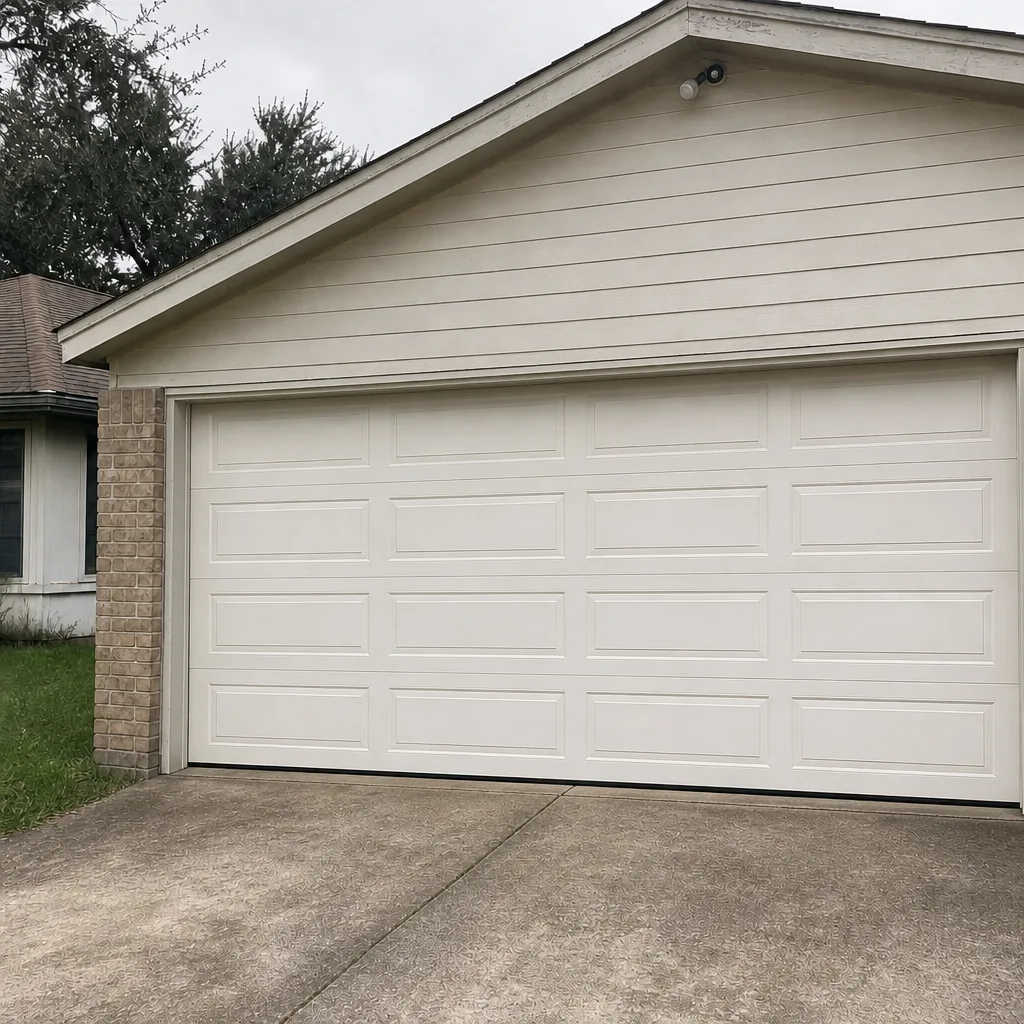
See the difference
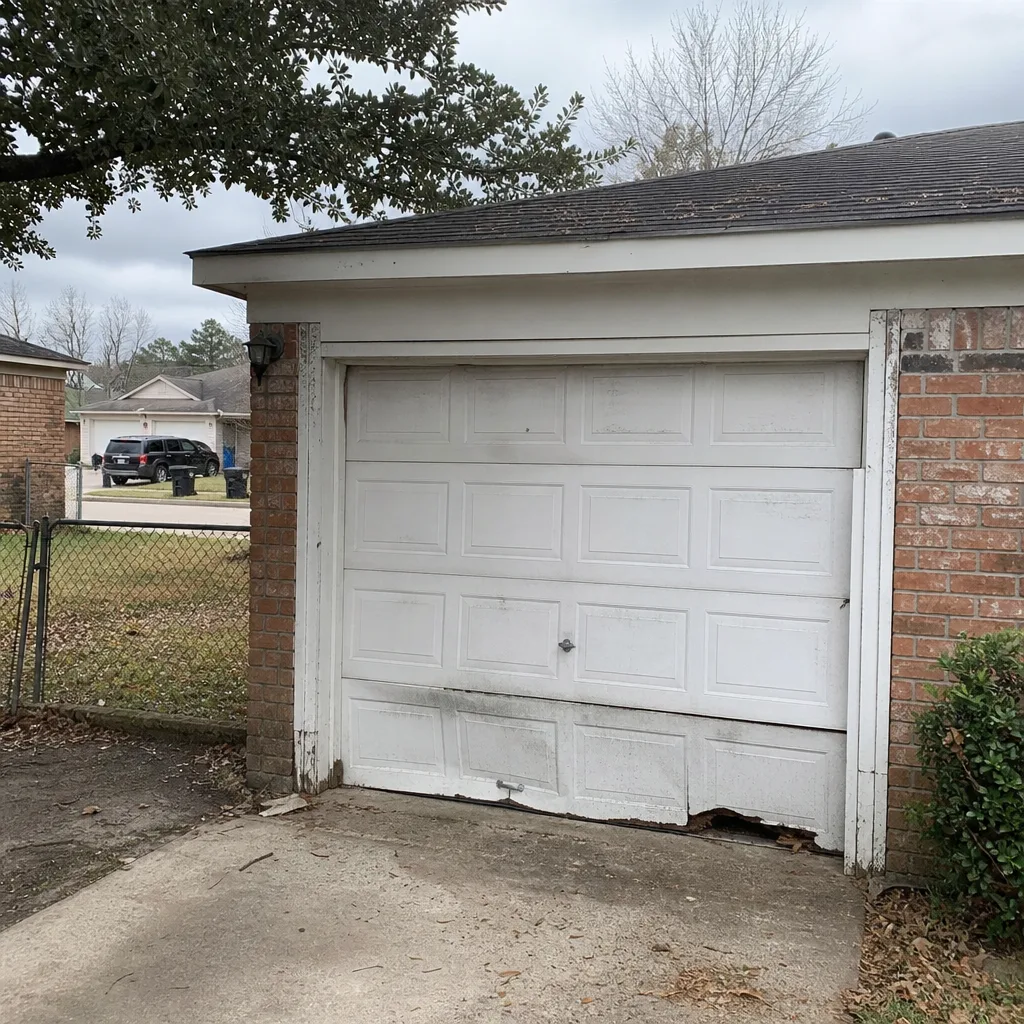 Before
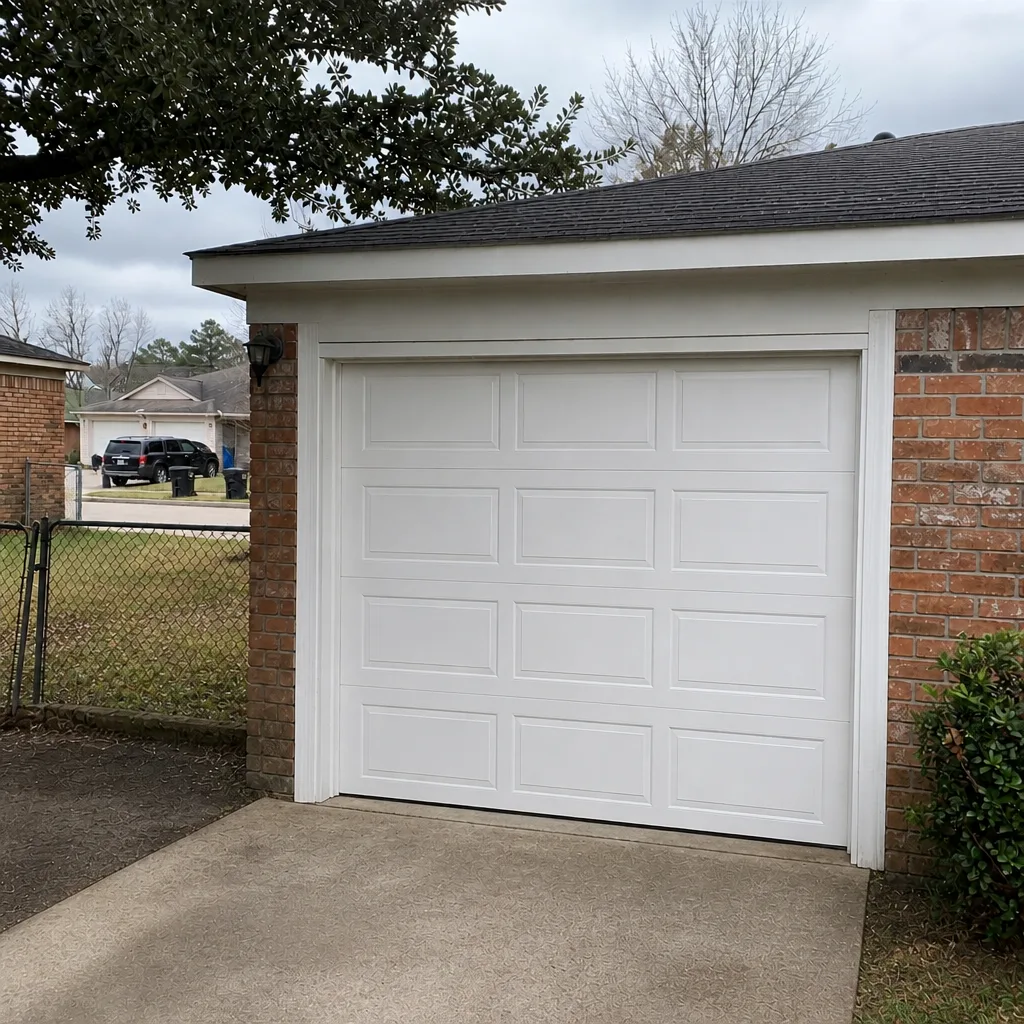 After
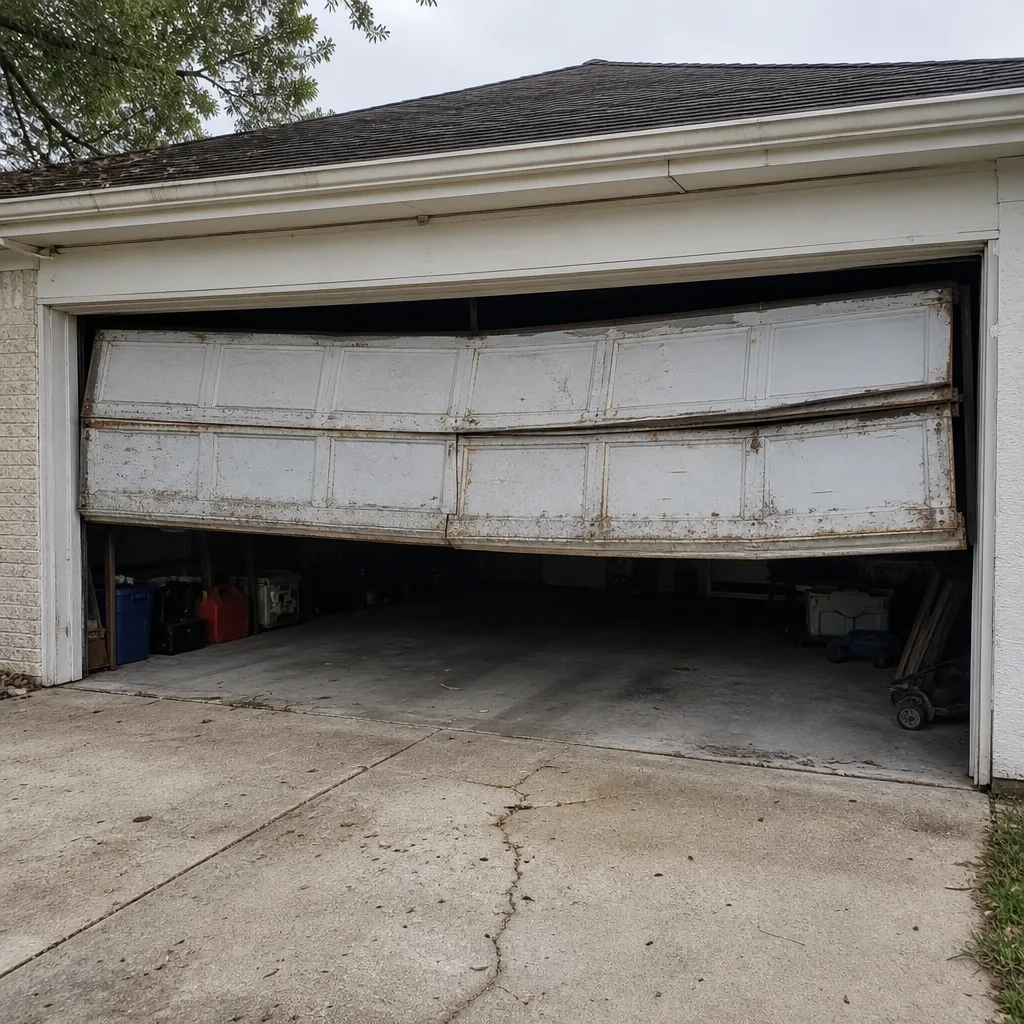 Before
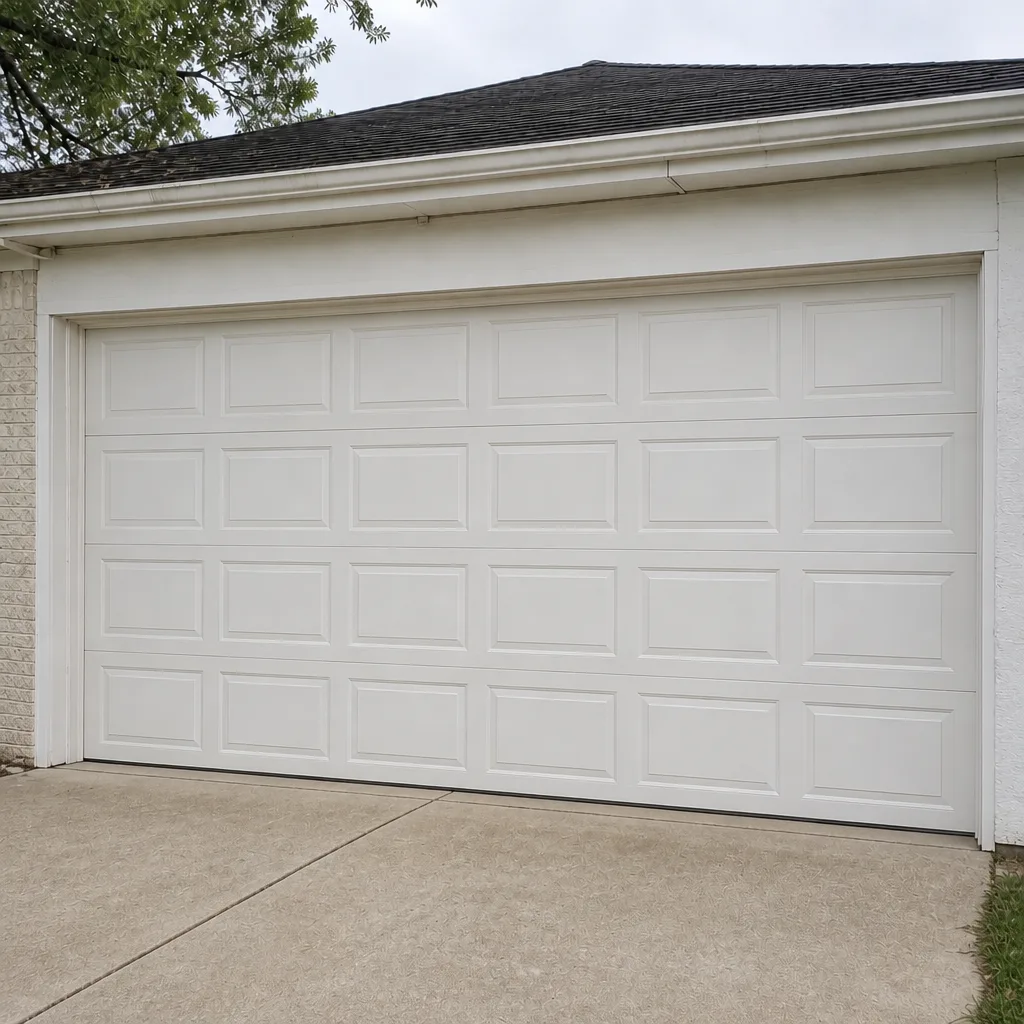 After
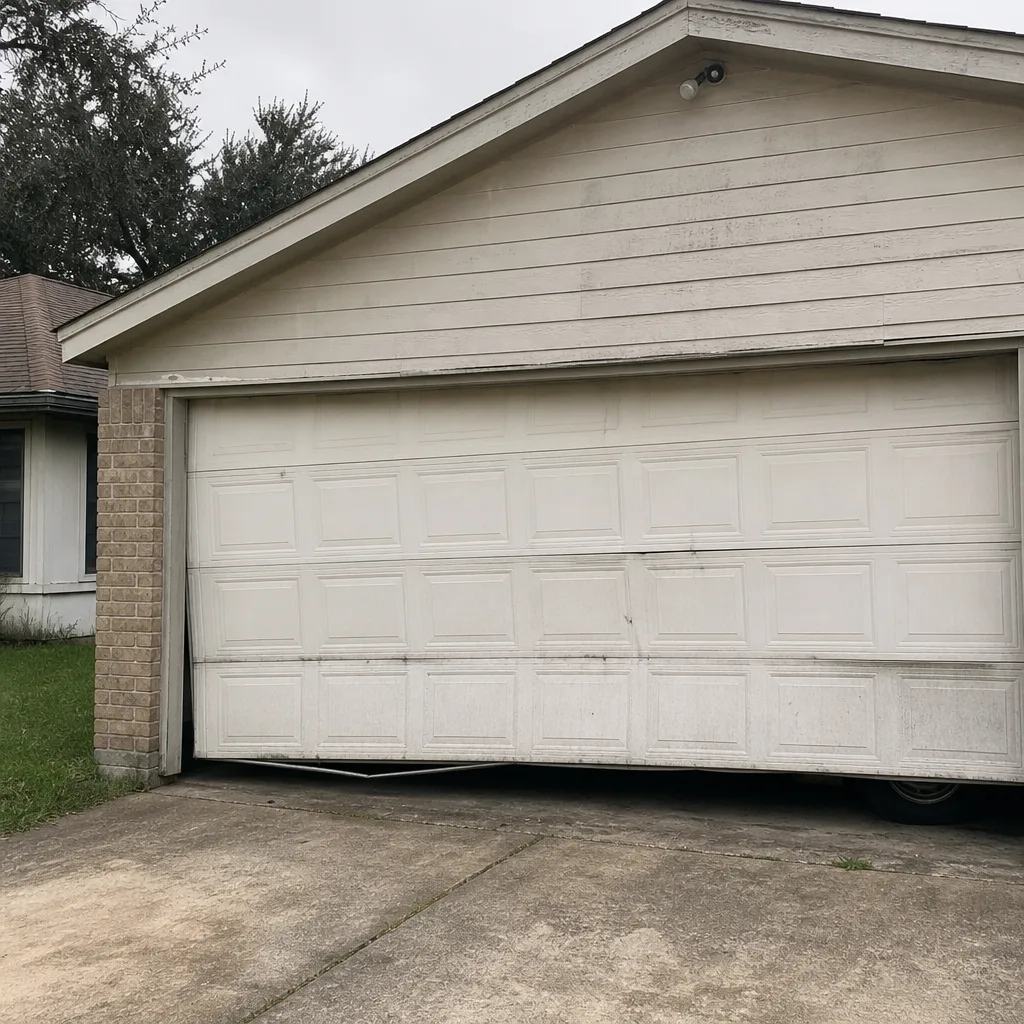 Before
 After
When to Call a Professional
Call a professional the moment a sign crosses from cosmetic into mechanical. That includes: a spring that has snapped or lost visible tension, a frayed or slack cable, a door that is off track or jumping a roller, a door that reverses before closing and can’t be fixed by removing an obstruction, uneven travel, grinding metal-on-metal, or an opener that reports a diagnostic code you don’t recognize. If the door is heavy to lift by hand with the opener disengaged, that’s also a professional call – the door is out of balance. Pasadena Garage Door Repair Co offers free estimates in Pasadena – call (855) 337-1170. Whether it’s emergency or planned, we cover it, and we’ll tell you straight whether a sign is a watch-and-schedule or a same-week repair.
Frequently Asked Questions
The most common are hesitation before the door lifts, rust streaks on tracks, a shrinking weather seal, and uneven travel. In Pasadena, the seasonal humidity accelerates corrosion on rollers and bearings, and strong UV shrinks seals faster than in milder climates. If you’re seeing two of these together, it’s worth a diagnostic.
Typical estimates in Pasadena run $120-$250 for a basic repair call, $180-$340 for a torsion spring repair (one spring – a matched pair is usually replaced together at about twice that), and $200-$400 for a weather seal replacement. Opener repair usually runs $150-$350 depending on the issue. Every price is a written estimate before any work starts, so the number you agree to is the number you pay. Call (855) 337-1170 for an exact quote – estimates are free.
Yes – stuck, off-track, or crashed doors are what our emergency service is for. Pasadena Garage Door Repair Co offers same-day service and fast dispatch from 7am to 7pm. When the door is a safety or security problem, call (855) 337-1170 and we’ll get you on the schedule.
No. The written estimate is set before any work starts. If we find something additional during the visit, we’ll explain it and quote it separately – you’ll never be surprised by an invoice that doesn’t match the estimate. Call (855) 337-1170 for a free estimate.
Yes. The technicians we work with are licensed and insured as the state requires. Our team is factory-familiar with the eight most-installed residential brands – LiftMaster, Chamberlain, Genie, Clopay, Amarr, Wayne Dalton, Craftsman, and Raynor – so the person at your door already knows your system. Call (855) 337-1170 to book a free estimate.
Repair is usually the right call for hardware-only problems: springs, cables, openers, rollers, tracks, and seals. Replacement earns the nod when the door has multiple bent panels, a wood door that’s swelling and cracking during humid summers, a system so old that parts are hard to source, or a combination of wear signs that would exceed half the cost of a new door. A free measure and written price gives you the number to compare against a repair quote, so you can decide with facts. Call (855) 337-1170 for a free estimate.
The Bottom Line
Garage door failures don’t come from nowhere. Between 48 hours and three weeks before a failure, the door gives you signs – a hesitation before it lifts, a rust streak on the track, a squeal, a reversing door, a shrinking seal. Reading them early is the difference between a scheduled repair and a parking-lot emergency. The two signals homeowners dismiss most – the hesitant start and the intermittent safety-sensor reversal – are the two that lead to the most expensive calls. If you’re in Pasadena and you’re seeing any of these, don’t wait for the door to fail on its own. Work with a specialist who knows the eight major brands, handles high-tension springs safely, and can cover repair, opener diagnostics, spring replacement, and full installation in one place. And remember: whether it’s emergency or planned, we cover it. Call Pasadena Garage Door Repair Co at (855) 337-1170 for a free estimate. Written by the team at Pasadena Garage Door Repair Co.